
Learn to Shape Your Own Wooden Surfboard
Immerse yourself in a 3-week hands-on journey from waves to workshop, guided by Rodrigo, a shaper with over 20 years of experience.
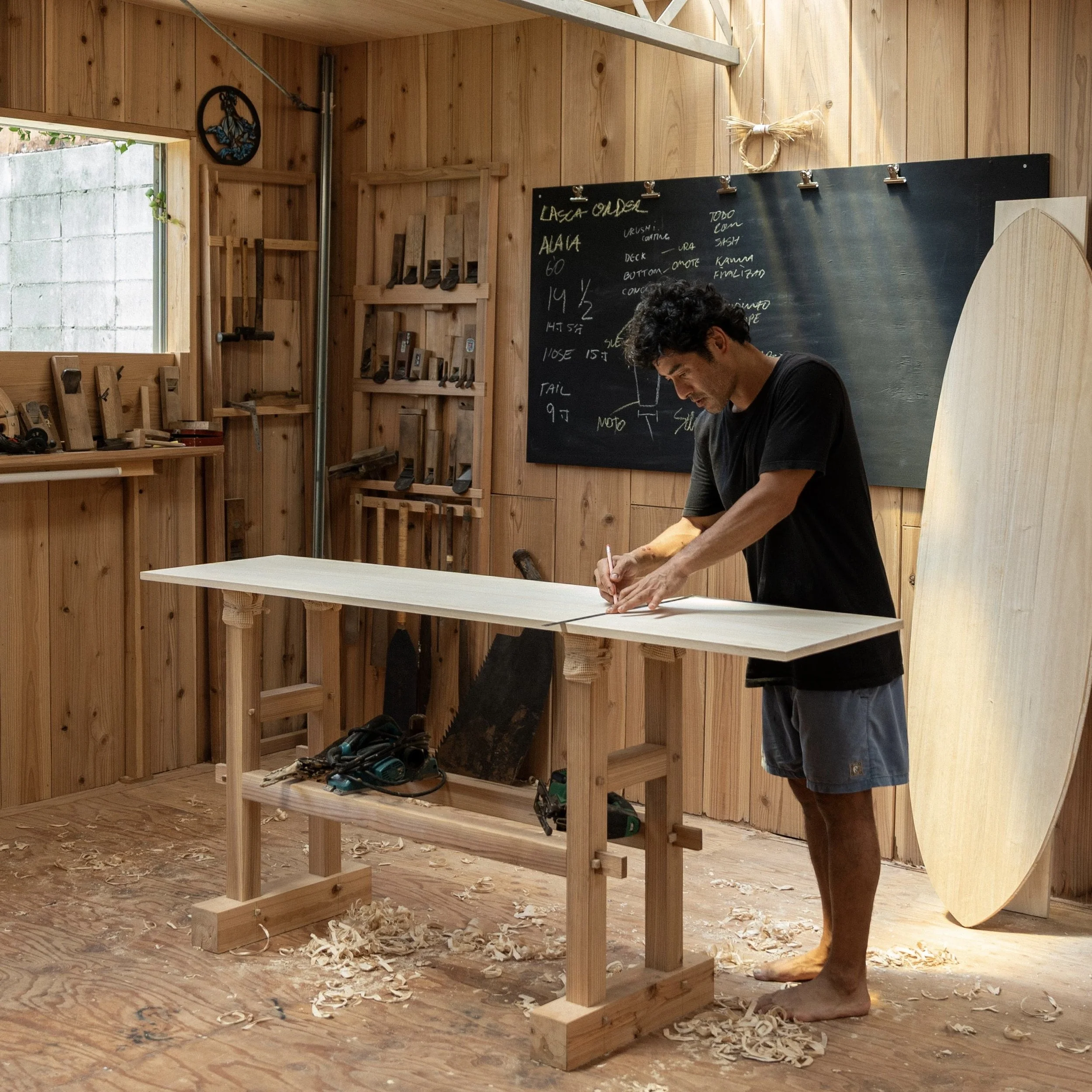
This immersive 3-week program guides you from the ocean to the craft.
You’ll explore the waves, the history of surfboards, and the physics behind their movement, before moving into the workshop to learn about the tools, techniques, and subtle details that shape performance and aesthetics. Under Rodrigo’s guidance, you will shape your own wooden surfboard from start to finish.
Outings to different beaches for surfing and beach cleans allow you to stay connected to the ocean, inspired by it, and engaged in caring for the environment that informs the craft. This is a hands-on journey that honors the flow between sea, wood, and hand, for those ready to shape their own board while deepening their connection to the sea.
Practical Details
Duration: 3 weeks
Daily schedule: 9:00–17:00, with a 1-hour lunch break
Group size: up to 2 participants (most of the program is one-on-one instruction)
Individual guidance ensures each participant receives tailored attention throughout the program.
Location: Nanjo, Okinawa
What’s included:
Yours to take home
Your handcrafted wooden surfboard
A bodysurfing handplane you craft during the program
A high-quality chisel for continued woodworking practice
A professional Japanese hand plane (Kanna)
Provided during the program
All materials and shared workshop tools
Beverages and light snacks
Experience required: None — this program welcomes beginners and returning shapers alike. Enthusiasm, curiosity, and willingness to work with your hands are all that’s needed.
Price: $5,000 USD
Includes instruction, materials, and your completed wooden surfboard. Most of the program is taught one-on-one, ensuring deeply personalized guidance from Rodrigo throughout the three weeks.
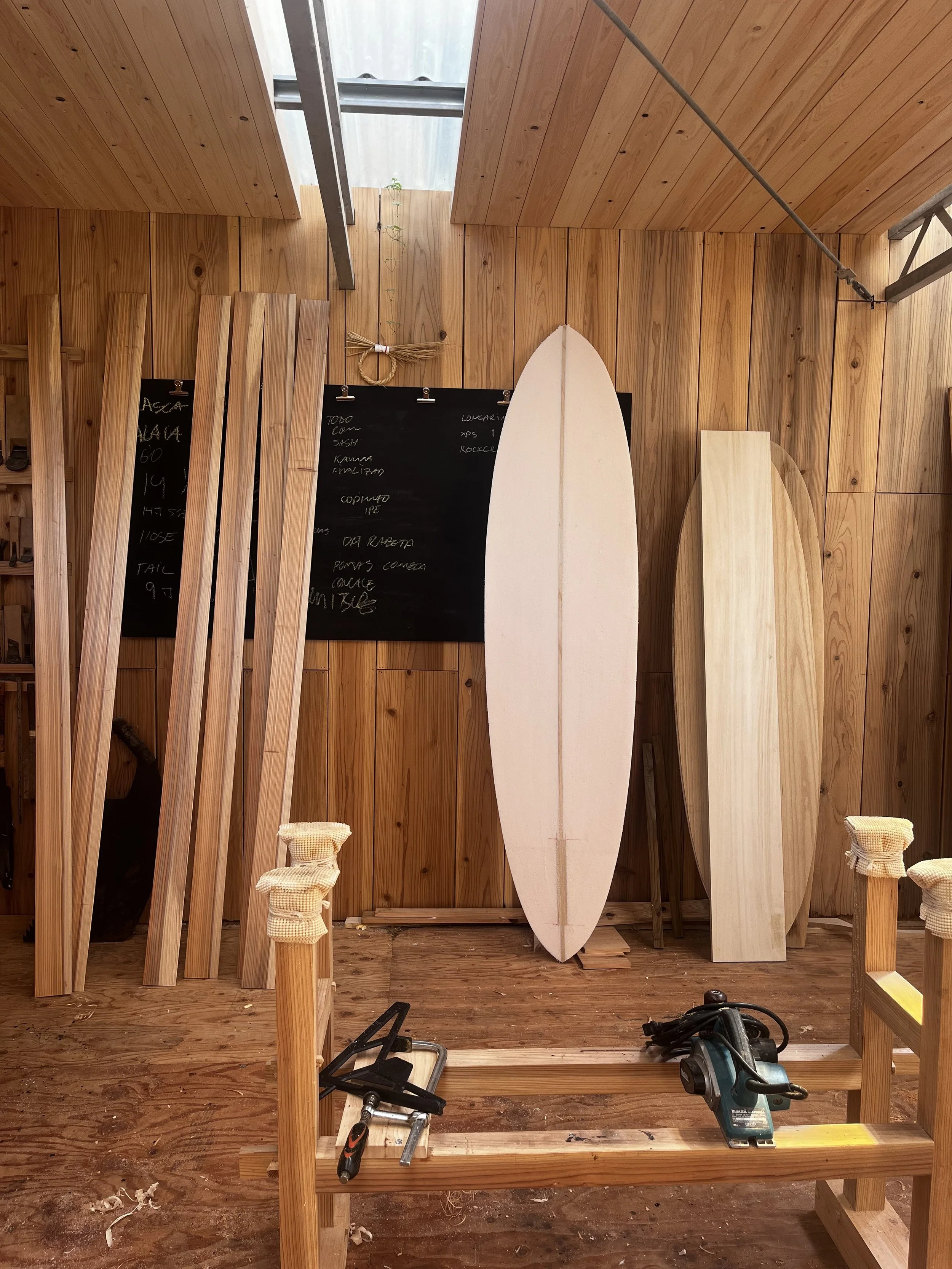
The Process
1. Design & Understanding
Before shaping begins, we study how a board moves. You’ll explore the fundamentals of surfboard design, wave behavior, and hydrodynamics — and plan a model and size suited to your goals. Understanding how subtle adjustments affect speed, hold, and stability allows you to shape with intention rather than imitation.
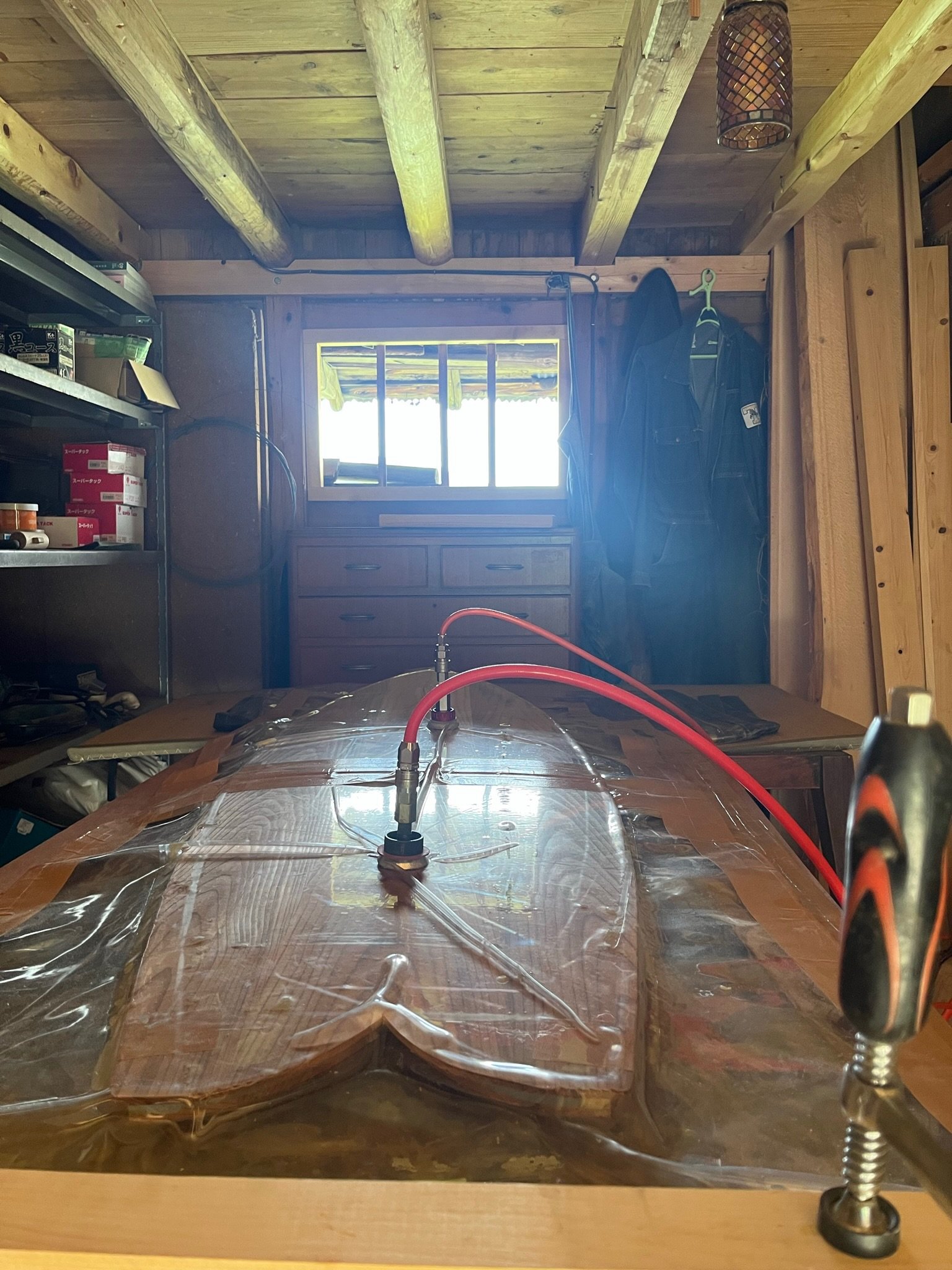
2. Preparing the Materials
The process begins with the wood itself. You’ll prepare blanks and stringers, learn proper tool handling, and sharpen a Kanna (Japanese hand plane). Attention to grain, balance, and structure forms the foundation for everything that follows.
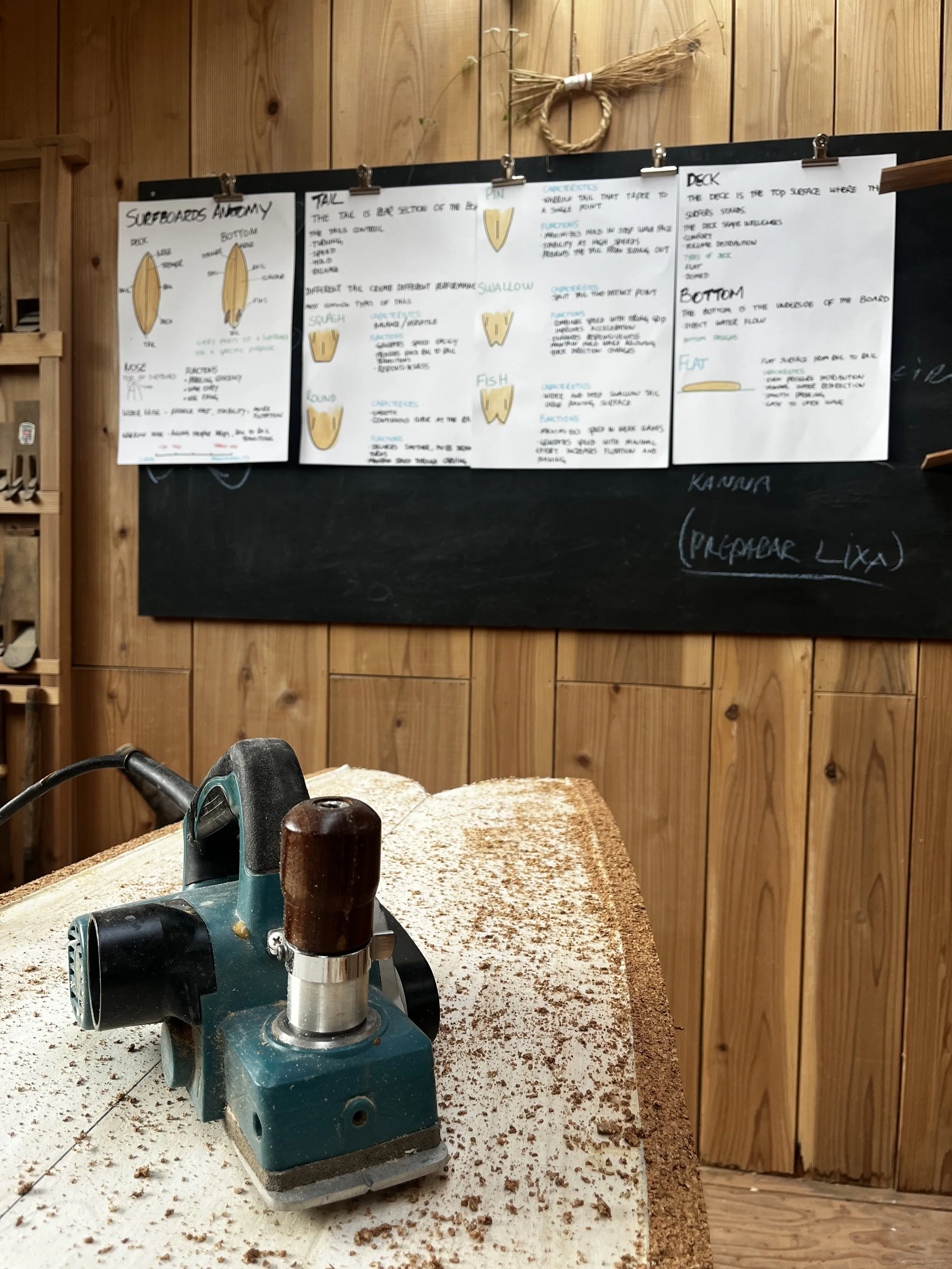
3. Shaping
Form gradually emerges through careful refinement. Rails, nose and tail blocks, and structural elements are shaped under close guidance. With only 1–2 participants, adjustments are made in real time, allowing the board to evolve with precision and clarity.
4. Finishing
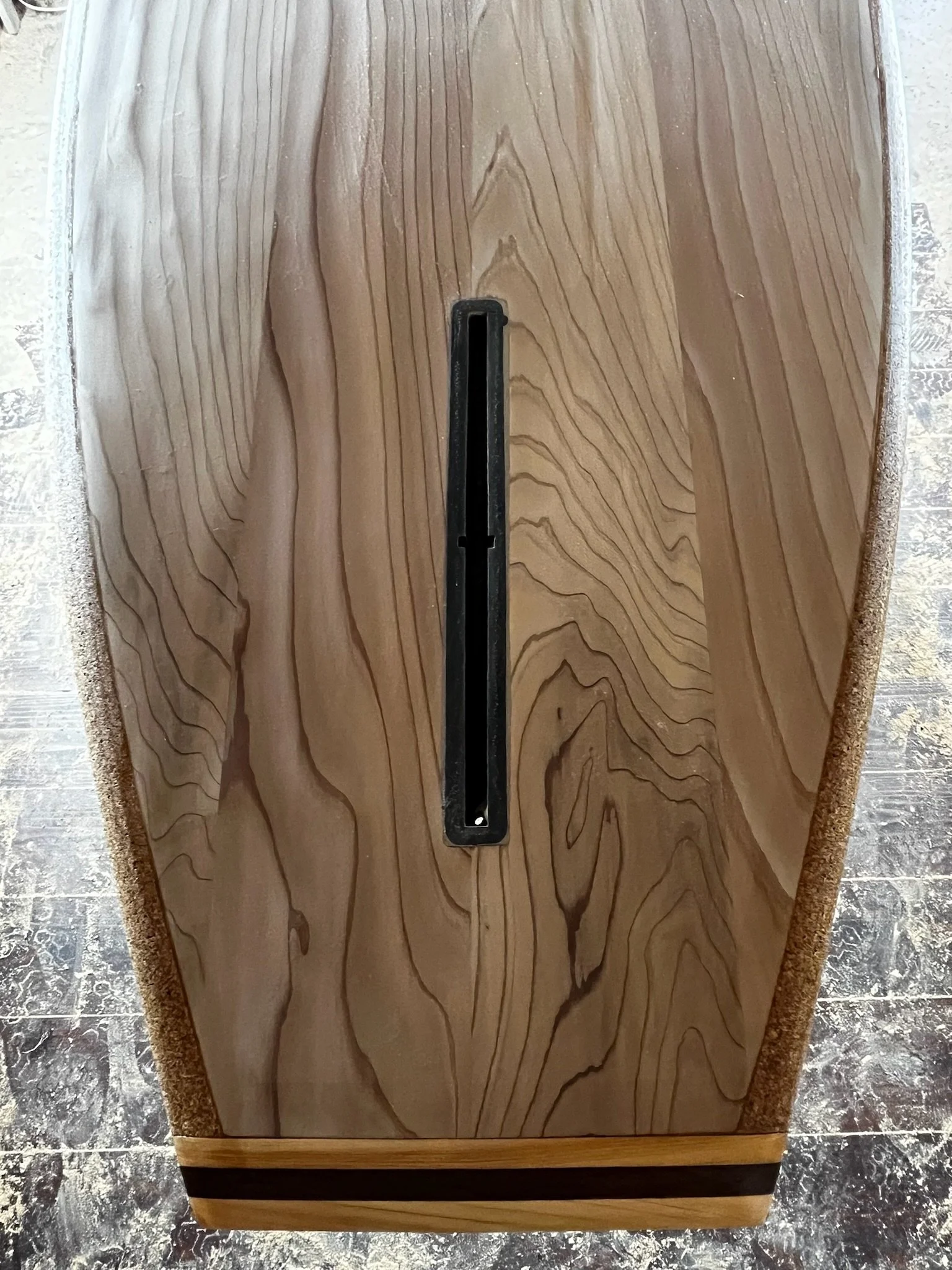
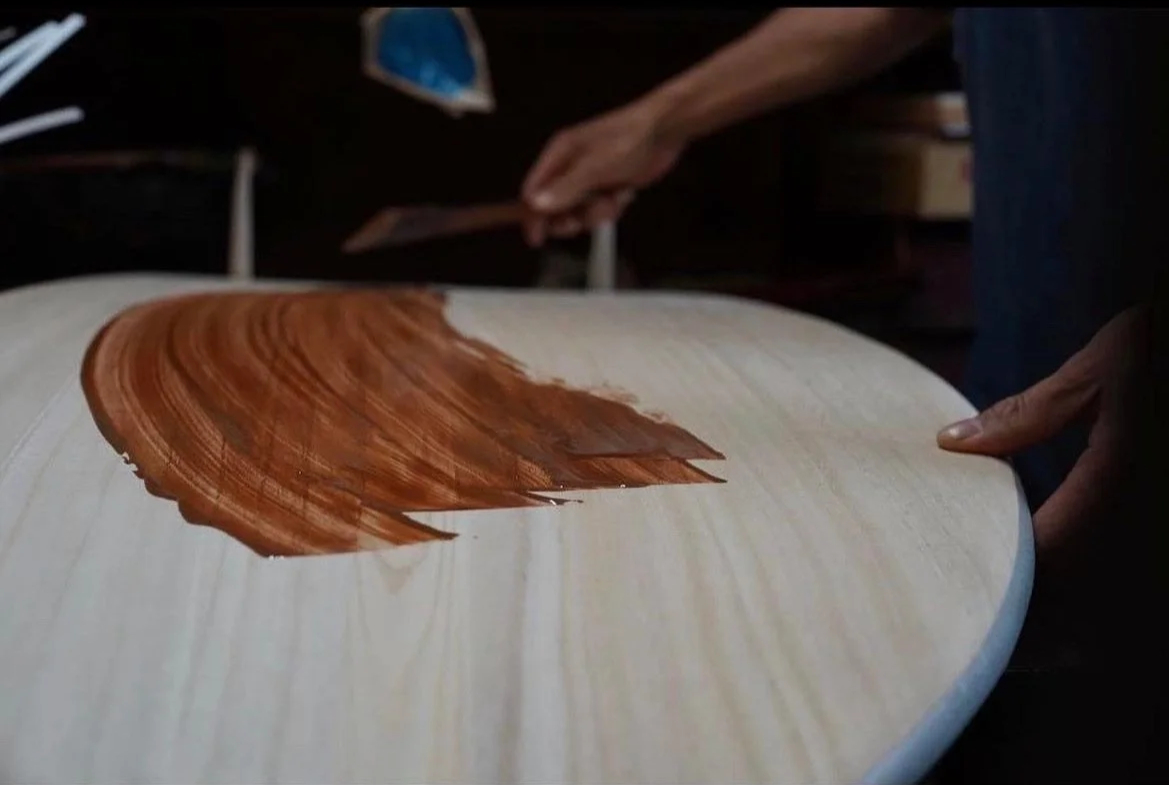
Surface is not decoration — it is longevity. During the program, you apply the first layers of oil or Urushi, learning how to properly seal and protect the wood. As each layer rests, we craft a wooden handplane together — allowing you to enter the water immediately while your surfboard continues its curing process. Additional finish layers are completed at home, ensuring the board matures properly before regular use.
Alongside the Workshop:
Time in the Ocean
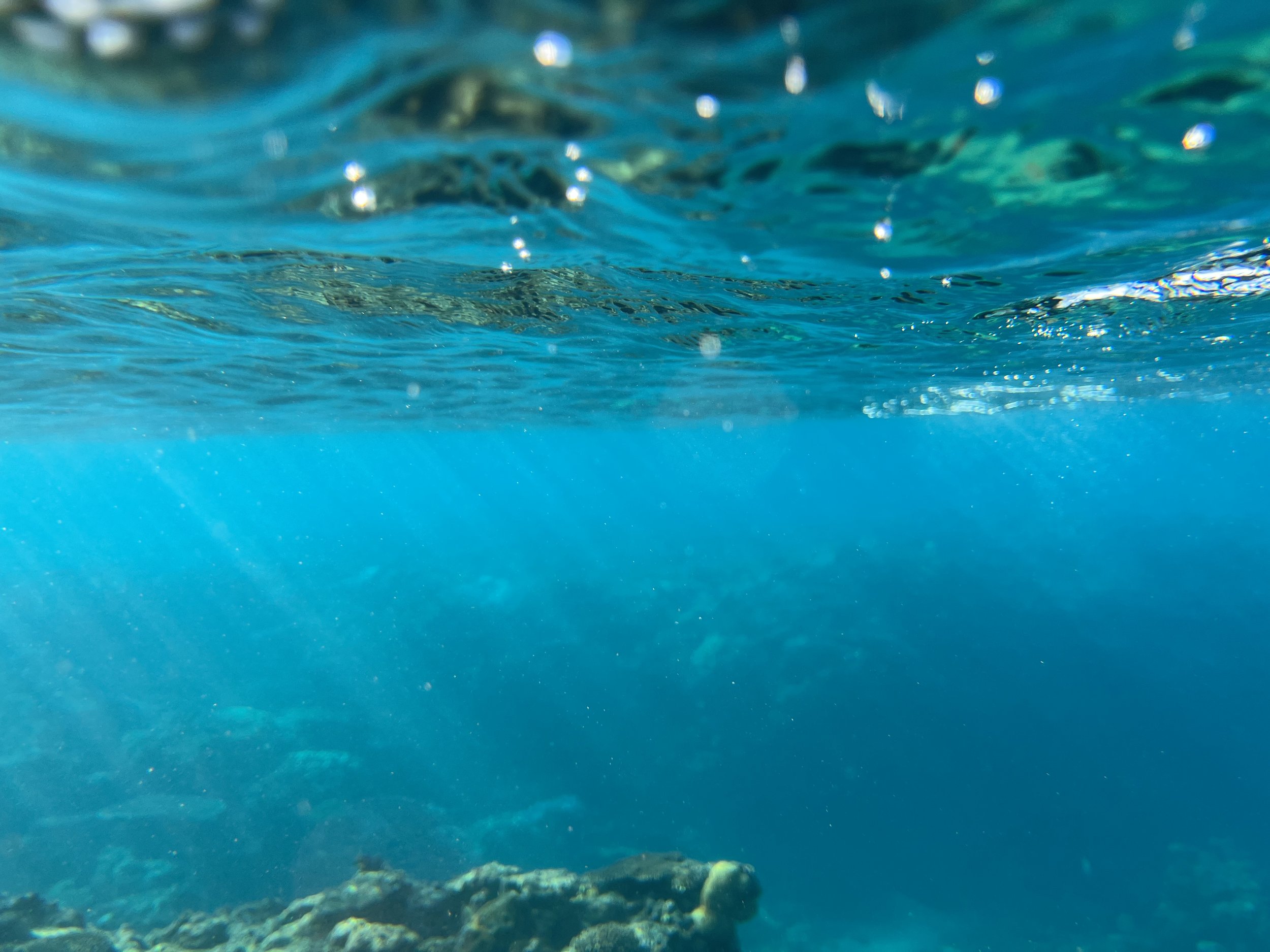
Throughout the three weeks, we spend time by the sea. We observe waves, discuss conditions, and test different board models in the water using boards shaped by Rodrigo.
These sessions allow you to feel how design choices translate into movement — how rails engage, how rocker affects speed, how subtle differences change stability and flow.
Beach cleanups and time along the shoreline keep the work grounded in its source — the ocean that inspires it.
Additional Details
Wood
Wood selection will be provided, with natural variations in grain and character.
Experience
No prior woodworking experience is required.
The program welcomes complete beginners as well as woodworkers, surfers, and shapers — anyone curious to work with their hands and engage deeply with the process.
Safety & care
Woodworking asks for sharp tools and steady presence.
Participants should feel comfortable standing for extended periods and working with their hands. Regular breaks are taken, and guidance is provided throughout.
Safety guidance will be given, and mindful care is expected throughout the course.
Alternative Schedules
We understand that schedules vary. This program can be spread out over multiple weekends, or adapted to non-consecutive days, giving you flexibility to fit the workshops into your calendar. If you have other ideas for how to pace your learning, please share them when inquiring. We welcome these conversations and will consider each request individually.
Get In Touch
If you have questions about the program or would like to share your preferred schedule, please use the form to get in touch. We'll review your message and get back to you as soon as possible.